
Influencer marketing is no longer just about awareness. Better measurement, more sophisticated creators, and stronger connections with traditional UA channels are turning it into a measurable performance channel for mobile apps. But making it work at scale requires much more than simply finding creators with large audiences.
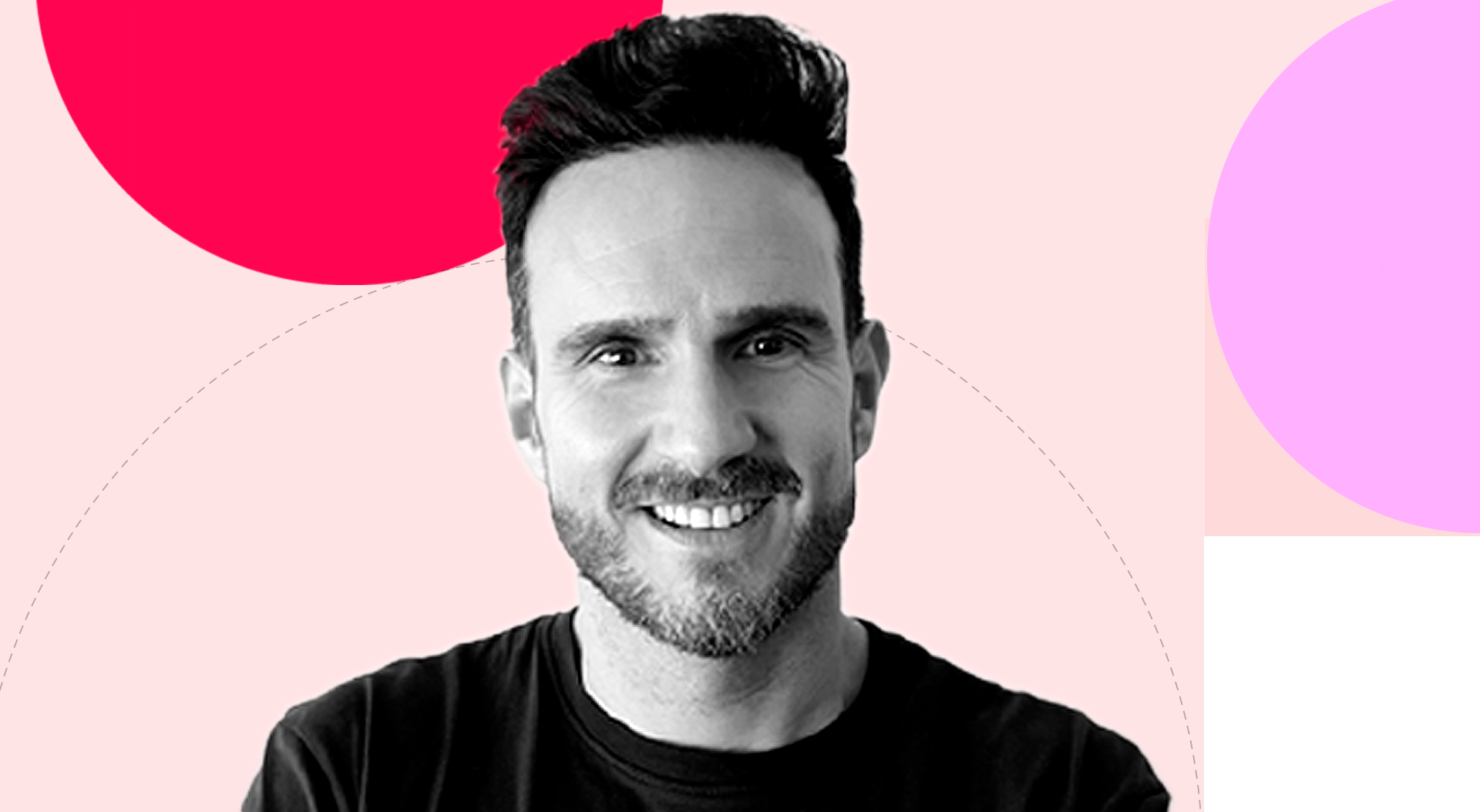
With more than 15 years of experience in mobile, David Cremades, Senior Business Development at Ramped, has seen this evolution firsthand. In this interview, he shares his perspective on choosing the right creators, measuring performance beyond installs, integrating influencer marketing into the wider UA mix, scaling campaigns, and the role AI could play in the future of creator-led growth.
Influencer marketing has traditionally been seen as an awareness channel. What has changed to make it a real performance and UA channel for mobile apps?

I think two things have changed: measurement and the maturity of the creators.
I’ve been working in mobile for more than 15 years, and I’ve seen this evolution first-hand. In fact, I was already talking about influencer marketing at App Promotion Summit London back in 2019, when the channel was much less professionalized than it is today.
At the time, we were already using influencers to acquire users for our mobile games. We even took titles like Real Madrid Fantasy Manager to number one in the charts in countries like Argentina, working with the right creators and paying relatively little. The CPIs we were getting back then would probably make most UA managers very happy today.
The difference is that we couldn’t really prove any of it. There was no clean attribution, so when a game jumped to the top right after a creator posted, you connected the dots yourself. It was attribution by deduction — experience, intuition and a lot of testing.
A few years ago, it was really difficult to know what an influencer campaign was actually doing for your app. You could count views, likes and comments, but then came the classic question: “Great… but how many users did we actually get?” Today, with MMPs, custom store links, promo codes and better attribution and post-install modeling, we can follow the user from the content to the install and, more importantly, see what happens afterwards.
And once you can measure something, you can optimize it. That changes the conversation completely.
The second change is the creators themselves. Good creators have become much more sophisticated. They understand hooks, CTAs, retention and what makes their audience take action. They are not media buyers, of course, but many of them have a surprisingly good understanding of performance.
There is also a big advantage for apps: the distance between content and conversion is incredibly short. Someone watches a creator they trust, taps a link and can be in the App Store in seconds. You’re not asking them to fill out a 10-field form or book a sales call. That’s a pretty good environment for performance marketing.
When building an influencer strategy for user acquisition, what matters most when choosing the right creators: audience size, engagement, content fit, performance data, or something else?
Honestly, audience size is probably the least important of all of them.
I’ve seen creators with 20,000 followers outperform creators with millions. Which is a good reminder that follower count is not a KPI. It’s just a number someone can put in a media kit.
For me, the first filter is fit. Does the creator’s audience actually look like the people who would use and pay for the app? Geo, age, interests, behavior. And perhaps even more importantly: would this creator genuinely use the product themselves? When there is a real match, the content feels much more natural and people can tell. You can’t really fake authenticity for very long.
Then I look at engagement, but not just the percentage shown in a dashboard. I like looking at the comments. Are people asking questions? Tagging friends? Saying “I need this”? That tells you much more about the relationship between the creator and their audience.
Past performance is obviously very useful when you have it, and we use it to identify creators who consistently convert. And this is why micro and mid-tier creators can be so interesting. Smaller audience, but often much stronger trust and better cost efficiency.
So if I had to choose one thing, I’d say trust and fit. Size gets you reach. Trust turns that reach into an install.
One of the biggest challenges with influencer marketing is proving its impact. Which metrics should app marketers focus on to understand whether a campaign is actually driving growth?
The biggest mistake I see is stopping at views, likes and reach.
Those numbers are useful, but if your influencer report starts with views and ends with views, you don’t really have a performance report. You have a popularity contest.
I always try to push the conversation further down the funnel. Installs and CPI are the starting point, not the finish line. What really matters is what those users do afterwards: registration, first purchase, subscription, CPA, retention, D1, D7, D30, ROAS and ultimately LTV.
Because you can have a campaign delivering very cheap installs that never open the app again. And another campaign might deliver fewer users but much more valuable ones. If you only optimize for CPI, you can end up celebrating the wrong campaign.
From a measurement perspective, MMP data, custom store links and promo codes are obviously important. And when possible, I also like looking at incrementality rather than assuming that every attributed install is an incremental user.
One of my favorite ways to judge influencer performance is simply to compare cohorts. How do creator users behave compared with users from other channels? Retention and LTV usually tell you the truth pretty quickly.
And influencer users often surprise people here: they tend to convert better, because they already know the brand before they download. A brand might pay around $40 for a first deposit through pure performance, and closer to $60 when that same user comes from a creator. On paper it looks more expensive. But if those users convert more and stick around longer, that higher price is a bargain, not a problem.
How should influencer marketing work alongside traditional UA channels like paid social and programmatic, rather than as a separate strategy?
It shouldn’t really live in its own box. And I think this is one of the biggest opportunities teams are still missing. The channels feed each other.
The clearest example is creative. Influencer marketing is basically a creative factory producing authentic, native content at scale. And in performance marketing, good creative is basically fuel.
A good piece of creator content doesn’t necessarily need to stay on the creator’s profile. With whitelisting, Spark Ads or other paid amplification, you can take that content and put media budget behind it on Meta, TikTok and other platforms. So the creator becomes both an acquisition channel and a creative engine for your paid campaigns.
There is also a halo effect. A good creator campaign can increase branded searches, organic installs and even improve paid conversion rates because people already recognize the app when they see the ad.
The way I like to think about it is full funnel. Creators are great at building trust and consideration. Paid social and programmatic are great at scale, optimization and retargeting. Connect the two, share the data and suddenly you have a much stronger growth engine.
Treating influencer marketing as a completely separate channel is basically leaving performance on the table.
At Ramped, you work with apps across gaming, subscriptions, and other verticals. What differences do you see in the way influencer marketing performs across these categories?
They behave quite differently. And I should say that at Ramped we actually have more experience on the apps side than in pure gaming.
Gaming has always been ahead on measurement. A gaming UA manager historically couldn’t even conceive of running a campaign without tracking close to 100% of the spend, and for a long time that made influencer marketing hard for them to accept — the attribution simply wasn’t there. That’s changing now: today you can estimate a very high percentage of the users you acquire through creators, so the gap is much smaller. On top of that, a lot of gaming teams have realized the users coming from influencer marketing are genuinely good, while the traditional channels are getting saturated and a bit worn out. So gaming is opening up to the channel much more than it used to.
Subscription apps are a different game. The install is almost the easy part. The real challenge is converting that user into a paying customer and keeping them for several months. That’s where authenticity becomes even more important. In categories like health, fitness, finance or dating, people want to see someone they actually trust using the product. They want to understand whether it works for someone like them. Otherwise, you can end up with a beautiful campaign, lots of installs and very few subscribers. And that’s a very expensive way of creating beautiful content. Your CFO might disagree with the definition of success.
For utility apps, the winning angle is often much simpler: problem → solution. Show me a pain point and then show me how the app solves it in a few seconds.
So the content style, platform mix and KPIs change depending on the vertical. What doesn’t change is the basic principle: the right creator, with the right audience, telling the right story.
Scaling influencer marketing can be much more complex than simply increasing spend on a traditional UA campaign. What does it take to turn creator marketing into a scalable acquisition channel?
This is probably the part people underestimate the most.
With paid social, scaling can feel like moving a budget slider. Influencer marketing doesn’t have a “10x everything” button. To scale you need more creators, and that means a lot of operations behind the scenes: sourcing, vetting, briefing, contracts, content reviews, payments and tracking. Multiply that by dozens or hundreds of creators and it gets complicated fast.
But the biggest mistake I see isn’t operational, it’s impatience. People kill campaigns too early. Influencer marketing is harder to optimize than classic performance, and the first results are rarely the good ones. You need a few iterations to learn which creators, formats and messages actually work.
The way we explain it to clients is in three phases. Month one is about learning: we spread the budget across a wide mix of creators, knowing that a good part of that spend won’t perform. That’s the price of the information. Month two we reallocate, cutting what didn’t work and moving budget toward the creators that did. By month three we’re scaling, with most of the budget concentrated on the creators we already know convert.
The difference is huge. In the first month, a big chunk of the spend lands in the “bad” or “slow” bucket. By the third, the top creators can be driving the large majority of your subscribers. Same channel, completely different efficiency, just a few iterations later.
That’s also where an agency earns its place. Doing all of this in-house is possible, but it takes time, people, and the patience to let the channel prove itself.
AI is changing both content creation and performance marketing. Where do you think it will have the biggest impact on influencer-led UA?
I think the biggest impact won’t necessarily be the flashy part, like having fully AI-generated influencers. It will probably be the less sexy stuff: discovery, operations, creative testing and analytics.
Finding the right creators for a specific app, market, language and audience has traditionally been quite manual. AI can help us process much more data, identify patterns and potentially predict which creators are more likely to perform before we spend any money.
On the content side, I see AI as a very good assistant. Editing, subtitles, localization, adapting a video to different markets and generating multiple creative variations can all become much faster. And that’s particularly interesting for performance: if you can test 20 hooks instead of two, your chances of finding the winner obviously go up.
But there is a line we need to be careful about, and that’s authenticity. The whole reason influencer marketing works is that people trust another human being. If everything becomes synthetic, we risk removing the very thing that makes the channel effective in the first place.
So my bet is that AI will make creators and marketing teams much faster and smarter. But hopefully it won’t make everyone sound like a robot.
Looking ahead, do you think influencer marketing will become a standard part of the UA mix for mobile apps? What needs to happen for the channel to reach its full potential?
Yes, absolutely. I think it’s already moving in that direction.
Over the years I’ve seen quite a few channels go from “let’s try it” to “where is it in the media plan?” Influencer marketing is heading the same way, and the conversations around it — attribution, LTV, creative testing, scalability — are far more sophisticated than they were just a few years ago.
The privacy changes of the last few years make trusted, first-party and contextual signals more valuable, and creators sit in a good position because they already have the audience relationship that brands are trying to build.
For the channel to reach its full potential, I think three things need to happen. First, measurement needs to become more standardized: a CMO should be able to look at influencer performance next to paid social or programmatic and have a similar level of confidence in the numbers. Second, the tooling needs to mature, because there is still too much manual work involved considering how big the opportunity is. And third, marketers need to change the way they think about the channel. A lot of companies still put influencer marketing in the “brand” bucket and then wonder why they can’t justify the budget.
The more we can show consistent, measurable business results, the faster that changes.
So in a few years, I don’t think we’ll even talk about influencer marketing as a completely separate channel. It will simply be another part of the UA mix. And honestly, that’s probably when we’ll know it has finally grown up.
Subscribe to our newsletter
Important Security Notice
Beware of scammers impersonating Tappx brand
We have identified fraudulent activities where malicious actors are imitating Tappx assets. These scams may compromise your security.
⚠️ Warning: The URL you came from has been flagged as potentially harmful.
To stay safe, only trust communications and services from the official Tappx domain: tappx.com